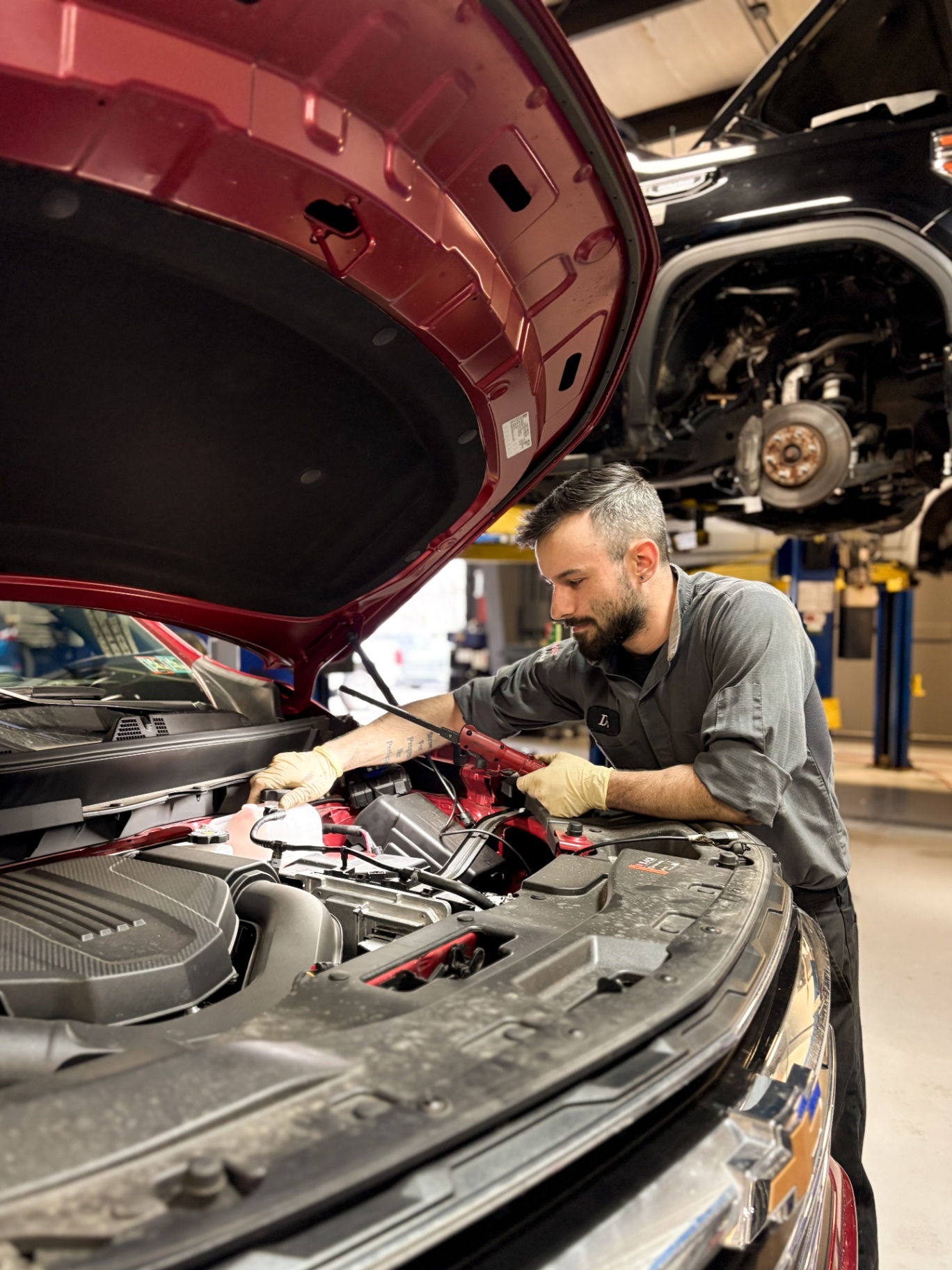
There is no single career path in automotive service. What follows is a typical progression at a franchised dealership, along with the alternative routes many technicians take. Timelines vary by individual, employer, and the amount of training a technician completes.
There is more than one technician career path
Some technicians spend their whole career in the bay by choice, becoming diagnostic specialists or master techs. Others move to shop foreman, service advisor, service manager, warranty administrator, or aftermarket roles. None of these paths is more legitimate than another.
Student or career changer
Formal automotive programs at community colleges and technical schools generally run one to two years. Some are accredited by the ASE Education Foundation and offer Entry-Level Certification for graduates. Career changers may enter through similar programs or through direct entry-level hiring.
Apprentice technician
Apprenticeships combine on-the-job learning with structured instruction. Registered apprenticeships (through the U.S. Department of Labor or the Pennsylvania Apprenticeship & Training Office) follow specific standards. Informal "apprentice" positions vary by employer. See our apprenticeship article for evaluation guidance.
Lube or maintenance technician
Entry-level maintenance work — oil services, tire mounting, multi-point inspections, brake wear checks. It is the fastest way to get real bay time and to learn how a dealership operates end to end.
General service technician
Adds brake replacements, basic drivetrain services, batteries, and light diagnostic work. Often the tier where technicians start meaningful ASE preparation.
Main-line technician
Handles the broader range of repair orders — steering and suspension, engine repair, electrical, HVAC. This is the tier where flat-rate pay begins to matter most, and where dispatch fairness has the biggest financial impact.
ASE-certified technician
ASE certification is voluntary but widely recognized. A tech certified in all eight A-series tests (with the required work experience) can earn the Master Automobile Technician designation from ASE.
Manufacturer-trained technician
Brand-specific training is a separate track. Depending on the manufacturer, senior or master OEM designations are typically required for certain warranty work and advanced repairs. See our GM certification guide for one example.
Diagnostic specialist
Some technicians specialize in the diagnostic side, taking on the toughest driveability, electrical, and network problems that other techs cannot flag efficiently. Compensation for diagnostic specialists varies widely by shop.
EV and high-voltage specialist
As OEMs expand EV lineups, techs trained on high-voltage systems become more valuable. This path requires manufacturer training and specific PPE.
Commercial or fleet technician
Some techs move toward commercial-truck and fleet work — light-medium duty vans, chassis-cab trucks, utility vehicles. See our commercial and fleet careers article.
Master technician
The recognized top of the technical ladder, whether via ASE Master Automobile Technician or a manufacturer's master-tech designation. Requirements and titles vary by program.
Shop foreman or team leader
Combines advanced technical ability with quality control, dispatch input, and mentoring. Foremen are often the highest-paid technicians in a shop.
Service management opportunities
Service advisor, warranty administrator, assistant service manager, and service manager are all roles former technicians move into. Each requires new skills — customer communication, scheduling, financial performance — but a technical background is a real advantage.
Skills needed at each stage
Early stages reward reliability, curiosity, and safe habits. Middle stages reward speed, breadth, and diagnostic ability. Later stages reward judgment, mentorship, and the ability to keep learning as vehicles change.
Why timelines vary
Progression depends on training access, dispatch, mentorship, shop volume, and the technician's own drive. Two technicians who start on the same day at the same shop can reach very different tiers three years later.
How to evaluate an employer's career path
Ask for the written progression, the training the shop is currently sending techs to, and specific examples of technicians who have moved up in the last two years. See our guide on choosing a dealership for more.
Curious about a career at Patriot?
Explore opportunities with Patriot Chevrolet and Patriot Buick GMC in Limerick, Boyertown and Warminster, Pennsylvania. Available opportunities may vary by location, and submitting an interest form does not guarantee an interview or employment offer.
Frequently asked questions
- How long does it take to become a master technician?
- There is no single answer. It depends on training access, hours of relevant experience, and the specific program. ASE's Master Automobile Technician credential requires passing all eight A-series tests and meeting the experience requirement published by ASE.
- Do I have to leave the bay to make more money?
- Not necessarily. Master techs, diagnostic specialists, and shop foremen can earn as much as or more than some service management roles, depending on the shop.
- Is EV work replacing traditional automotive service?
- The vehicle mix is shifting, but internal-combustion vehicles will be in service for many years. Most successful technicians are cross-trained.
Sources
- Automotive Service Technicians and Mechanics — Occupational Outlook Handbook — U.S. Bureau of Labor Statistics (2024 data)
- 49-3023.00 — Automotive Service Technicians and Mechanics — O*NET OnLine (U.S. Department of Labor) (2024 data)
- About ASE Certification — National Institute for Automotive Service Excellence (ASE)
- Certification Tests — Automobile & Light Truck — National Institute for Automotive Service Excellence (ASE)
- Technician Supply & Demand Report — TechForce Foundation (2024 data)
Last reviewed July 24, 2026. Time-sensitive figures should be re-verified against the original source before use.
Related articles
Training and Certifications
How to Become a GM-Certified Automotive Technician
A plain-language look at manufacturer training for GM, Chevrolet, Buick and GMC service, and how it typically fits with ASE certification.
EV and Advanced Technology
What Does an EV Automotive Technician Do?
An overview of EV service work, the skills that transfer from internal-combustion repair, and the safety training that does not.
Commercial and Fleet
Commercial and Fleet Automotive Technician Careers in Pennsylvania
What commercial and fleet technicians actually work on, and how the job differs from retail service.