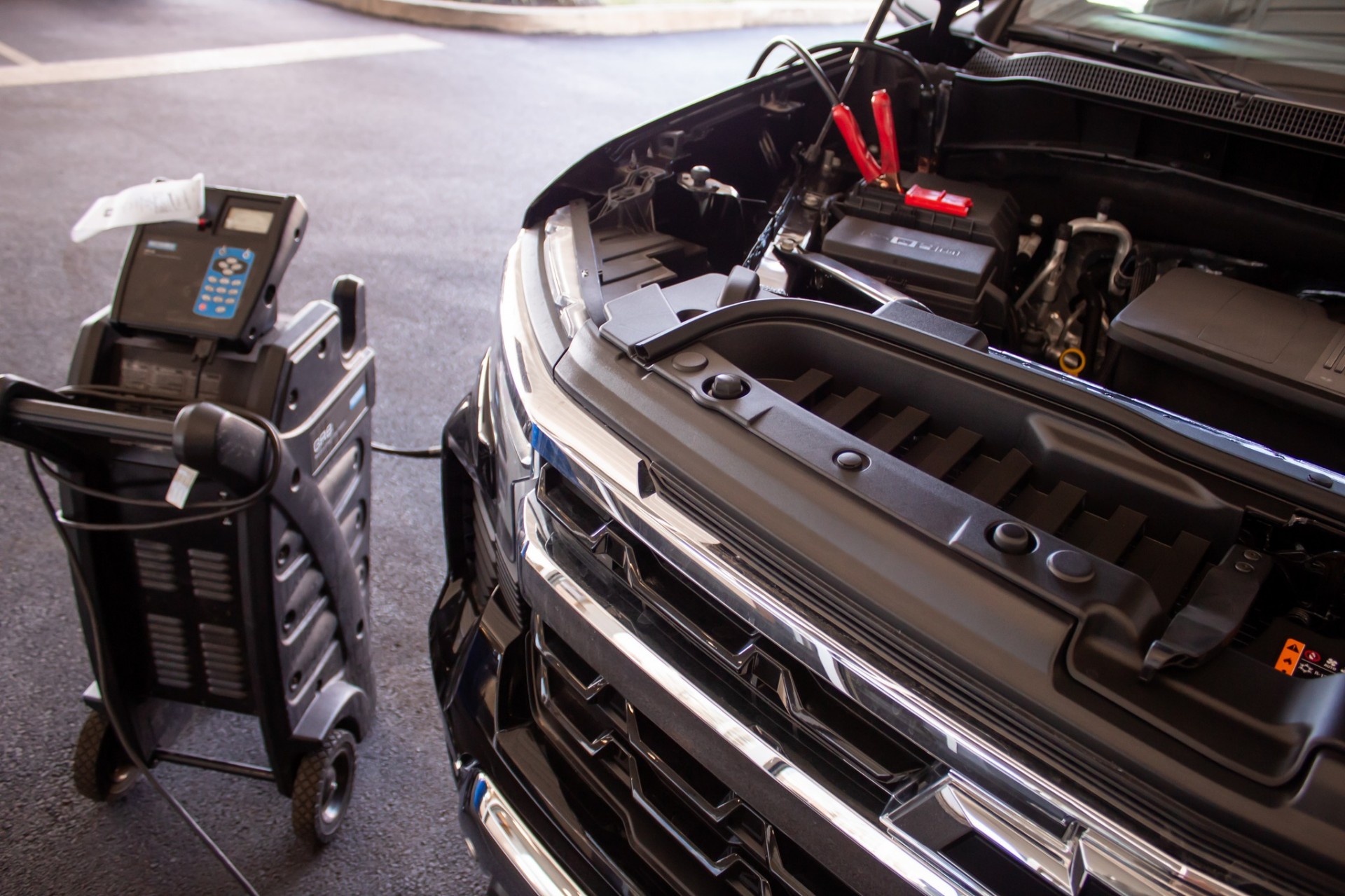
"Commercial and fleet" covers a wide range of vehicles and customer types. This article focuses on the light and medium-duty work most commonly seen in franchised dealerships — vans, chassis-cab trucks, and business fleet vehicles — not heavy-duty over-the-road trucking.
What commercial and fleet technicians work on
Typical vehicles include light-duty pickups used in fleet service, cargo and passenger vans, chassis-cab platforms that are upfit with service bodies, box vans, and utility bodies. Work includes routine preventive maintenance and repairs across the drivetrain, brakes, suspension, HVAC, and electrical systems.
Light-duty versus medium-duty vehicles
Light-duty vehicles (Class 1–2) share much of the technology of retail passenger vehicles. Medium-duty (Class 3–6) vehicles may involve heavier brake systems, air brakes on some platforms, and larger drivetrains. Not every dealership works on every class.
Trucks, vans and chassis-cab vehicles
Chassis-cab trucks are frequently upfit with third-party bodies. Technicians may need to work around, and sometimes with, the upfit to service the vehicle. Communication with the upfitter is sometimes required.
Preventive maintenance
Commercial and fleet accounts often follow scheduled preventive maintenance programs tied to mileage or engine hours. Consistent PM work is a large share of the job.
Downtime and business-customer expectations
Commercial customers lose money when their vehicles are out of service. Response times, communication, and turnaround matter more than in retail work. Some shops prioritize commercial jobs; some run them on parallel workflows.
Diagnostics
Modern commercial vehicles are as electronically complex as retail vehicles, and often more so because of upfit integration, PTO controls, and body-builder wiring.
Electrical systems
Body-builder wiring, aftermarket lighting, in-vehicle chargers, upfit controls, and power inverters all add complexity. Knowing where OEM wiring ends and upfit wiring begins is a specific skill.
Towing and load-related components
Trailer wiring, hitch systems, brake controllers, and load-related suspension complaints show up regularly.
Documentation
Commercial and fleet accounts often require detailed documentation for internal tracking or warranty. Clean, complete write-ups are part of the job.
Safety and compliance
Some commercial vehicle work touches Federal Motor Carrier Safety Administration regulations. Technicians should be familiar with which components are subject to periodic inspection rules and which service tasks have specific documentation requirements.
Useful experience and certifications
ASE offers a T-series test track for medium/heavy truck technicians for those who move deeper into that space. Manufacturer training paths for light-medium commercial vehicles also exist.
How commercial work differs from retail service
- More scheduled preventive maintenance and less impulse-driven work
- Different customer communication patterns (fleet managers, not consumers)
- More documentation
- More upfit and body-builder interaction
Career considerations
Commercial and fleet exposure often makes a technician more versatile and more valuable during retail slowdowns. Whether a shop offers this work depends on the dealership and the market.
Curious about a career at Patriot?
Explore opportunities with Patriot Chevrolet and Patriot Buick GMC in Limerick, Boyertown and Warminster, Pennsylvania. Available opportunities may vary by location, and submitting an interest form does not guarantee an interview or employment offer.
Frequently asked questions
- Do I need a CDL to work as a fleet technician?
- Generally no for shop-based service, though a CDL may be required for road-testing certain commercial vehicles depending on class. Confirm requirements with the employer.
- Is commercial work steadier than retail service?
- Often, yes, because of scheduled preventive maintenance. It also depends on the shop's fleet account mix.
- Do all Patriot locations service commercial vehicles?
- Available services vary by location. Confirm current commercial-service capabilities directly with the dealership.
Sources
- Automotive Service Technicians and Mechanics — Occupational Outlook Handbook — U.S. Bureau of Labor Statistics (2024 data)
- Federal Motor Carrier Safety Regulations — Parts & Accessories — Federal Motor Carrier Safety Administration
- Medium/Heavy Truck Tests (T Series) — ASE
- 49-3023.00 — Automotive Service Technicians and Mechanics — O*NET OnLine (2024 data)
Last reviewed July 24, 2026. Time-sensitive figures should be re-verified against the original source before use.
Related articles
Career Development
Automotive Technician Career Path: From Apprentice to Master Technician
The realistic progression from entry-level maintenance work to master technician, diagnostic specialist, or shop leadership.
Dealership Careers
How to Choose the Right Dealership Service Department to Work For
A practical evaluation framework for experienced technicians weighing a move to a new dealership service department.
Career Development
Automotive Technician Tools: What Employers Provide and What Techs May Need
A realistic overview of what tools technicians typically own, what the shop is expected to provide, and how to evaluate a tool policy.