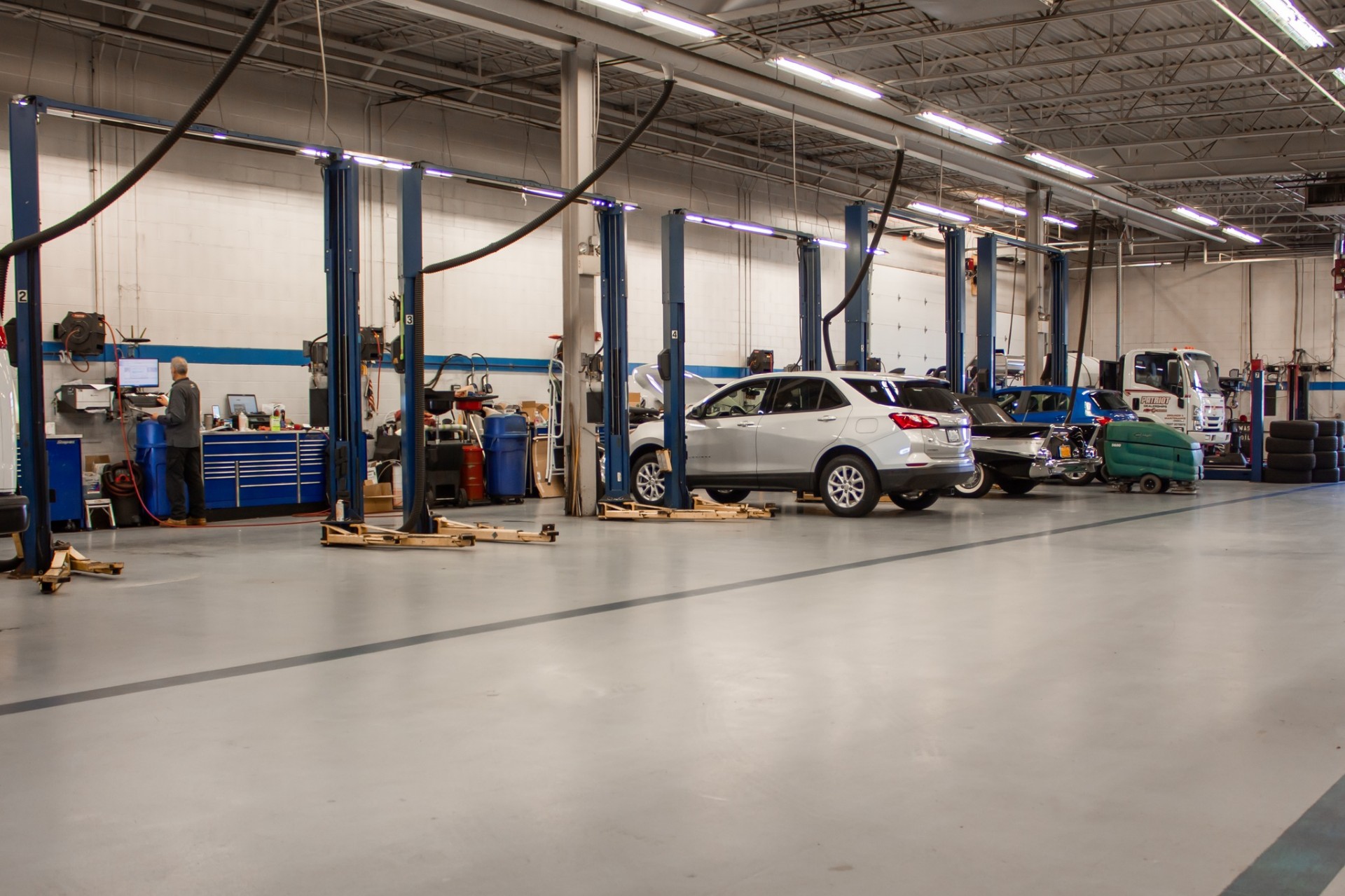
Changing dealerships is one of the biggest financial decisions a technician makes. The brand on the sign matters less than how the service department actually operates day to day. A well-run store with a mid-tier badge can pay a technician better and treat them better than a prestige brand with a broken shop. This guide walks through what to look at before you sign anything.
Why the service department matters as much as the brand
Two dealerships selling the same brand can run their shops in completely different ways. Dispatch, parts availability, warranty labor times, technician mix, and management culture are all set locally. That is where your paycheck is actually made. Judge the store, not the emblem.
Start with the complete compensation plan
Ask for the pay plan in writing before you accept anything. A verbal number is not a compensation plan. The written plan should cover base or hourly rate, flat-rate rate, any guaranteed minimum hours, how bonuses are earned and paid, benefit contributions, tool allowances, uniform coverage, and any bonus repayment or clawback terms. If the store will not provide a written plan, treat that as data.
Understand hourly, salary, flat-rate and hybrid pay
Dealership technician pay generally falls into four buckets: hourly, salary, flat-rate (paid per flagged hour), and hybrid (a guaranteed base plus flat-rate above a threshold). Each has trade-offs in stability, upside, and how much your production and the dispatcher's decisions affect the check. Our companion guide on flat-rate versus hourly pay covers the mechanics in detail.
Ask how work is dispatched
Dispatch determines who gets which repair orders. Ask who assigns work, whether it rotates, whether experienced techs get first pick of gravy jobs, and how diagnostic time is handled when a repair does not sell. A shop with fair, transparent dispatch is a different job than a shop where two senior techs get all the good work.
Evaluate workload without accepting vague promises
"We are busy" is not an answer. Ask for the average repair-order count per day, the ratio of customer-pay to warranty work, and how workload changes seasonally. Ask what happens on slow days. Ask what happens on the days a tech physically cannot flag 8 hours because the work is not there.
Ask about customer-pay, warranty and internal work
Warranty jobs generally pay the manufacturer's published labor time, which can be tight. A shop with a heavy warranty mix affects flat-rate earnings differently than a shop with a heavy customer-pay mix. Internal work (used-car recon, dealer-installed accessories) is another lever. Ask for the rough breakdown.
Understand the first 90 days
Ask what onboarding actually looks like: who trains you on shop systems, who assigns your first repair orders, how they measure early performance, and when a guarantee period (if any) ends. Most turnover happens in the first 90 days. Knowing the plan reduces the surprise factor.
Evaluate training and certification support
Manufacturer training keeps you eligible for advanced work and higher pay tiers. Ask which courses the dealership sends techs to, whether training time is paid, whether travel and lodging are covered for out-of-store schools, and what the ASE reimbursement policy looks like. General claims like "we support training" mean little without specifics.
Ask how mentors are selected and compensated
If you are early in your career, mentorship is worth more than a few dollars an hour on paper. Ask whether mentors are chosen or volunteers, whether they are compensated for training time, and how the shop protects a mentor's flag hours when they are teaching.
Inspect the tools and shop equipment
Walk the shop. Look at lift condition, alignment rack age, scan tool count, programming setup, EV service equipment, and how organized the parts department is. Look at the floors, the lighting, and the bathrooms. Shops that neglect fixed assets tend to neglect their people.
Ask how parts delays and approvals are handled
Parts delays kill flat-rate paychecks. Ask what happens when a part is on backorder and a job is torn down on your lift. Ask how sublet is handled. Ask who approves diagnostic time and how quickly.
Understand schedule and weekend expectations
Get the schedule in writing. Ask about Saturdays, on-call coverage, and required overtime. Ask what happens if you need to leave early for a kid's game. Ask what a normal week and a bad week actually look like.
Evaluate communication and management
Ask to meet the service manager, the shop foreman, and at least one technician who is not part of the interview. Ask the tech how they get paid, how disputes get resolved, and what they would change about the shop. Culture is set by whoever runs the shop, not by whoever runs marketing.
Ask about technician turnover and tenure
Ask how long the average main-line technician has been at the store, how many technicians have left in the last twelve months, and why. A store cannot always answer perfectly, but the honesty of the answer is itself informative.
Look for a documented career path
There should be a real answer to: how does a B tech become an A tech here, what does a master technician actually get paid, and what does the path into shop foreman or diagnostic specialist look like. For more on typical progression, see our automotive technician career path guide.
Tour the shop before accepting an offer
If the dealership will not let you tour the shop during business hours, that is data. Look at the bays, listen to the noise, and see whether technicians are working or waiting.
Questions to bring to a dealership interview
Bring a written list. We keep a detailed one in our interview questions guide, but at minimum, ask about pay plan, dispatch, workload, warranty mix, training, tools, schedule, and turnover. Take notes.
Warning signs worth taking seriously
- The pay plan will not be put in writing
- You cannot meet a working technician during your visit
- The shop is visibly disorganized or the equipment is aging
- Turnover in the last year is high and unexplained
- "We are like a family" is offered as a substitute for a real answer
- The signing bonus has aggressive repayment terms you do not understand
Final evaluation checklist
Curious about a career at Patriot?
Explore opportunities with Patriot Chevrolet and Patriot Buick GMC in Limerick, Boyertown and Warminster, Pennsylvania. Available opportunities may vary by location, and submitting an interest form does not guarantee an interview or employment offer.
Frequently asked questions
- Is a bigger dealership always a better place to work?
- Not necessarily. Larger stores can offer more consistent volume and more training resources, but they can also have tighter dispatch and more politics. The right size depends on the store's leadership and your own preferences.
- Should I take a signing bonus?
- Signing bonuses can be helpful, but read the repayment terms carefully. Understand exactly what triggers a clawback, how it is calculated, and how long you must stay to keep the full amount.
- How long should I stay at a dealership before evaluating again?
- Most technicians benefit from giving a role at least 6 to 12 months before drawing conclusions, unless there are safety or compensation issues that were misrepresented.
Sources
- Automotive Service Technicians and Mechanics — Occupational Outlook Handbook — U.S. Bureau of Labor Statistics (2024 data)
- 49-3023.00 — Automotive Service Technicians and Mechanics — O*NET OnLine (U.S. Department of Labor) (2024 data)
- About ASE Certification — National Institute for Automotive Service Excellence (ASE)
- Technician Supply & Demand Report — TechForce Foundation (2024 data)
Last reviewed July 24, 2026. Time-sensitive figures should be re-verified against the original source before use.
Related articles
Pay and Compensation
Flat Rate vs. Hourly Pay for Automotive Technicians
How flat-rate, hourly, salary and hybrid technician pay plans actually work, with hypothetical examples and the questions to ask.
Dealership Careers
Questions Automotive Technicians Should Ask During a Job Interview
The questions that separate a good dealership offer from a bad one — grouped so you can bring them to the interview and take notes.
Career Development
What Automotive Technicians Should Know Before Changing Shops
A pre-move checklist for technicians thinking about leaving their current shop.